Lumpia, But Make It Fashion: Meet the Semarang Street Vendors Giving Classic Indonesian Food a Modern Makeover
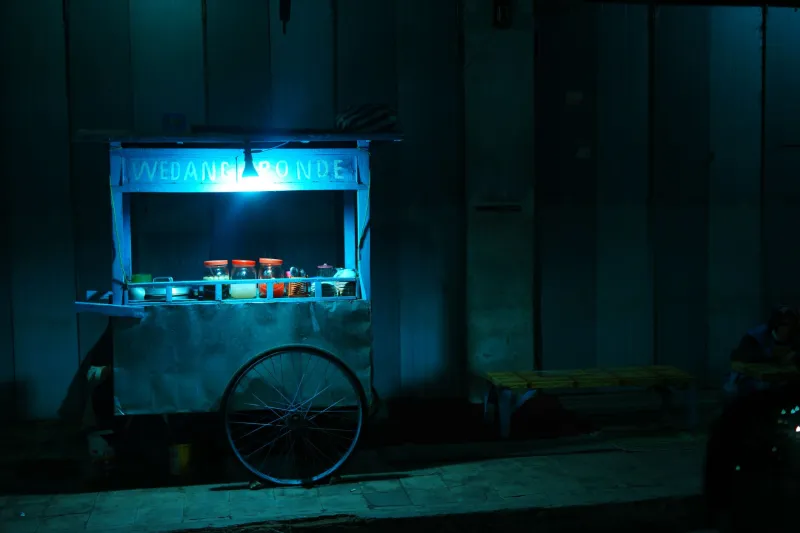
There's a saying among food-obsessed Indonesians: if you haven't eaten in Semarang, you haven't really eaten in Java. That might sound like regional bragging — and okay, it is a little — but spend 48 hours grazing through this city's street stalls and night markets, and you'll understand why locals say it with such confidence.
Semarang's culinary identity is genuinely one-of-a-kind. Sitting at the intersection of Javanese, Chinese, Dutch, and Arab cultural influences, the city developed a food culture that's layered, surprising, and occasionally a little weird in the best possible way. Where else can you eat a spring roll that traces its lineage to 19th-century Chinese immigrants, wash it down with a coffee that evolved under Dutch colonial influence, and finish with a sweet snack rooted in ancient Javanese ceremony — all within a two-block radius?
But here's what's making Semarang's food scene especially interesting right now: a younger generation of vendors and street food entrepreneurs is taking those beloved classics and messing with them. Thoughtfully. Creatively. Sometimes controversially.
The Icon That Started It All: Lumpia Semarang
No food conversation about this city starts anywhere other than lumpia. These aren't the crispy egg rolls you'd grab at a Chinese-American takeout spot back home — Semarang's lumpia are a distinct animal entirely. The filling is typically a savory-sweet mixture of bamboo shoots, egg, and shrimp or chicken, wrapped in a thin crepe-like skin and served either fresh (basah) or fried (goreng). A dipping sauce made from sweet soy and garlic ties it all together.
The dish has been synonymous with Semarang for over a century, brought by Hokkien Chinese immigrants and adapted over generations into something uniquely local. You'll find lumpia carts on virtually every major street, and the debate over whose is best is the kind of argument that ends friendships.
So when vendors started experimenting with the format, reactions were... mixed.
Take Mas Rizky, 28, who runs a small stall near Simpang Lima with his older sister. Their version uses the traditional bamboo-shoot filling but adds a smear of spiced cream cheese inside the wrapper before frying — a nod, he says, to his time working in a hotel kitchen in Surabaya. "People told me I was ruining lumpia," he laughs. "Now those same people line up every night."
His stall regularly sells out before 9 PM.
Nasi Goreng Gets a Glow-Up
Nasi goreng — Indonesian fried rice — is one of those dishes that every American who's spent time in Southeast Asia has an opinion about. At its best, it's smoky, complex, and deeply satisfying. At its worst, it's just... oily rice.
In Semarang, several vendors are elevating the dish in ways that feel genuinely exciting rather than gimmicky. One increasingly popular variation you'll spot at night markets is nasi goreng hitam — black fried rice colored and flavored with squid ink, giving the dish an earthy, briny depth that's completely different from the standard version. It looks dramatic on the plate (or banana leaf, more accurately) and tastes even better than it looks.
Another trend: vendors topping classic nasi goreng with a slow-cooked egg — similar to what the ramen world calls an ajitsuke tamago — marinated in sweet soy and spices. It's a small addition that completely changes the eating experience, and it reflects a broader sophistication among Semarang's street food community about texture, seasoning, and presentation.
The Significance Behind the Snacks
Understanding why Semarang's food culture is so distinctive requires a quick history lesson. The city was one of the most important ports in the Dutch East Indies, which meant waves of migration from China, Arabia, and other parts of the Indonesian archipelago, all of them bringing ingredients and techniques that eventually merged into the local culinary DNA.
Wingko babat, for example — a chewy coconut cake made from glutinous rice flour — is now so associated with Semarang that it's sold at the airport as a souvenir. But its origins lie in the coastal communities of Central Java, where coconut was abundant and the cake served practical as well as ceremonial purposes. Vendors today are making versions flavored with pandan, durian, chocolate, and even matcha, finding new audiences without abandoning the fundamentally comforting texture that makes the original so beloved.
"The soul of the dish has to stay," says Ibu Dewi, who has been selling wingko babat from the same spot near Tawang Station for 22 years and recently started offering a durian-filled version alongside the classic. "You can add new flavors, but you can't lose what makes it wingko."
That philosophy — innovation in service of tradition, not replacement of it — seems to be the guiding principle among Semarang's best street food innovators.
Where to Eat: A Practical Guide for Visitors
For Americans visiting Semarang with serious food intentions, a few spots and strategies are worth knowing:
Pasar Semawis (Chinatown Night Market) runs on Friday, Saturday, and Sunday evenings and is arguably the single best place to eat your way through Semarang's Chinese-Indonesian food heritage in one session. The crowd is lively, the stalls are packed, and the food is excellent.
Simpang Lima — the city's central plaza — is ringed with food vendors in the evenings and is a great spot for casual grazing. Look for the lumpia carts and the grilled corn vendors.
Jalan Gajah Mada in the Pecinan district has some of the city's most historic food stalls, some of which have been run by the same families for three or four generations.
A word on spice levels: Indonesian food in Semarang tends to be somewhat milder than food from, say, Padang or Manado, which makes it a relatively accessible entry point for Americans who are still calibrating their chili tolerance. That said, always ask before assuming — sambal (chili sauce) is everywhere, and some versions will absolutely ruin your afternoon if you're not ready for it.
The Bigger Picture
What's happening in Semarang's street food scene is a microcosm of something occurring across Indonesia's mid-sized cities: a generation of young food entrepreneurs who grew up eating their grandmothers' cooking, traveled or worked abroad, absorbed new techniques and ideas, and came home ready to do something interesting with the collision.
The result isn't fusion for fusion's sake. It's evolution — careful, respectful, and delicious. And for food-loving Americans willing to look beyond Jakarta and Bali, Semarang's streets offer one of the most rewarding culinary adventures in the entire archipelago.