Crumbling Grandeur: The Forgotten Dutch Mansions of Semarang Finding New Life
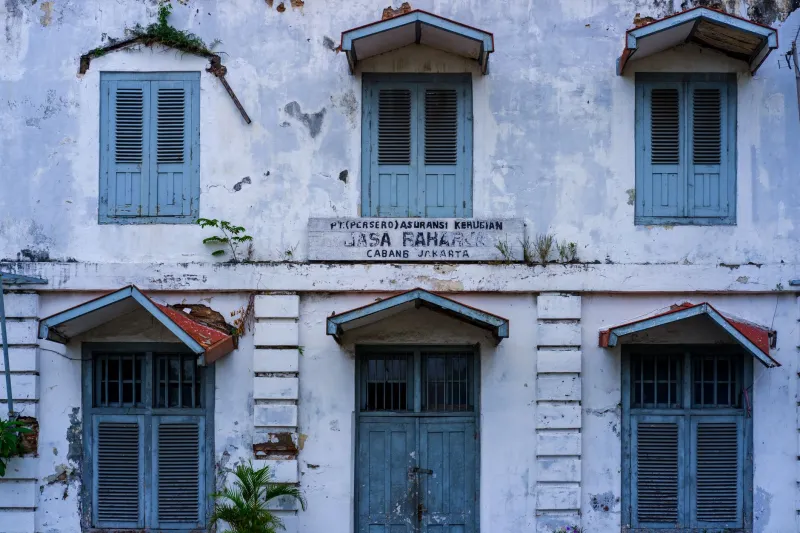
There's a particular kind of silence that settles inside an abandoned building. It's not peaceful, exactly — it's more like the air itself is holding its breath. Step through the rusted gate of one of Semarang's forgotten colonial mansions, and you'll feel it immediately. Peeling plaster the color of old cream. Ceiling beams that have surrendered to gravity in slow motion. And everywhere, the stubborn green creep of tropical vegetation doing what tropical vegetation does best: reclaiming what was never really ours to begin with.
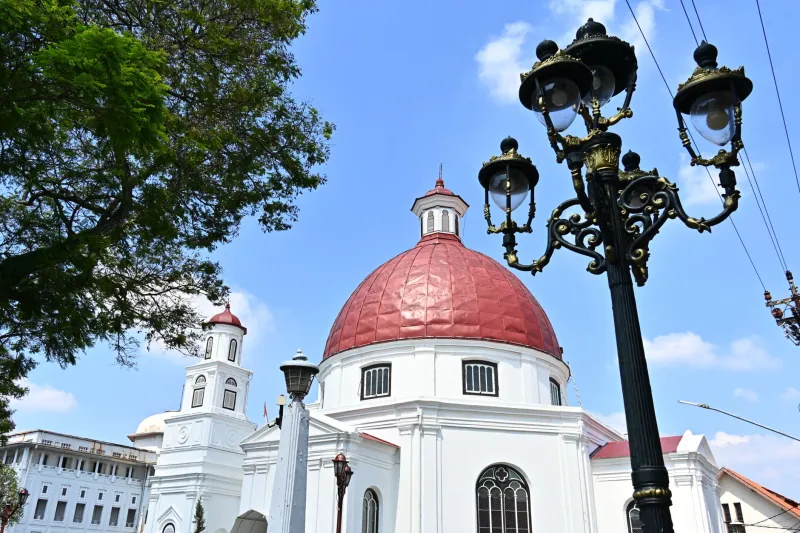
Semarang has dozens of these places. Most visitors walking through Kota Lama — the city's famous Old Town district — only see the restored facades lining the main drag. But push a little further into the surrounding neighborhoods, and you'll stumble onto a parallel city: one that time didn't so much forget as actively chose to ignore.
A History You Can Touch (Carefully)
To understand these mansions, you have to understand what they represented when they were built. During the Dutch colonial period, Semarang served as one of the most important commercial hubs in the Dutch East Indies — what we now call Indonesia. The city's wealthy merchant class and colonial administrators built their homes to project power, importing European architectural styles and fusing them, sometimes awkwardly, with the local climate and available materials.
The result was a distinctly Indonesian-Dutch hybrid: wide verandas designed to catch sea breezes, thick walls to hold off the equatorial heat, and ornate European detailing on buildings that were, at their core, trying to survive in a very un-European place.
When Indonesian independence came in 1945, many of these properties changed hands rapidly — or didn't change hands at all, falling into legal limbo that persists to this day. Inheritance disputes, unclear land titles, and bureaucratic complexity have left a significant number of these structures technically owned but practically abandoned. Nobody fixes what nobody can agree belongs to them.
The Urban Explorers Who Got There First
Before the preservationists, there were the adventurers. Semarang has a quietly thriving community of urban explorers — locally called penjelajah kota — who have been documenting these spaces for years, mostly through photography shared on social media. Think of them as the Indonesian equivalent of the American urbex community that made places like Detroit's abandoned Packard Plant famous online.
Rio Darmawan, a 29-year-old graphic designer who has been photographing abandoned structures around Semarang for six years, describes the experience with the kind of reverence you might expect from someone visiting a national park. "Every room tells you something different," he says. "You find old medicine bottles, family photographs, furniture that someone just... left. It's like archaeology, but the history is only 70 or 80 years old."
Rio is careful to distinguish his work from trespassing for thrills. He researches ownership before entering, seeks permission where possible, and documents structural conditions that he shares with local heritage organizations. His Instagram archive has become an informal catalog of at-risk properties — one that actual preservation groups have started using as a reference.
Artists Moving In Where Developers Won't
Not everyone is content to just photograph these spaces. In one of the more remarkable developments in Semarang's cultural scene, a loose collective of artists and creatives has begun negotiating short-term agreements with property owners to use abandoned mansions as temporary studios and gallery spaces.
The arrangement is unconventional by any standard. Artists get access to atmospheric, rent-cheap spaces. Owners get a degree of activity and visibility that can help with preservation arguments and, in some cases, attract the attention of legitimate restoration investors. Nobody's getting rich, but something is happening in buildings that were, until recently, just quietly falling apart.
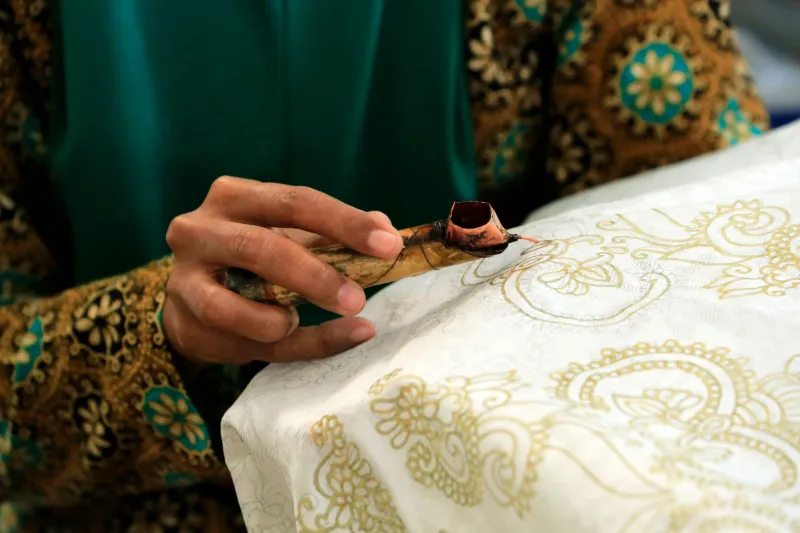
Sinta Rahayu, a textile artist whose work explores the intersection of Javanese tradition and contemporary design, spent three months working inside a partially collapsed Dutch-era villa in the Candi neighborhood. "The building became part of the work," she explains. "I was making pieces about layers — cultural layers, historical layers — and I was literally surrounded by layers. Plaster falling off walls to reveal older plaster underneath. Paint colors from three different eras showing at once. You can't manufacture that context."
Sinta's residency attracted other artists, then local journalists, then a small but steady stream of curious visitors. For a few months, a building that had been invisible became a genuine point of civic conversation.
The Preservationists Playing the Long Game
The more structured work of actual restoration is slower, harder, and considerably more expensive. Organizations like the Semarang Heritage Society have been pushing for formal protection of colonial-era structures for years, navigating a bureaucratic landscape that can feel designed to frustrate good intentions.
Indonesia does have heritage protection laws, but enforcement is inconsistent and the financial incentives for preservation are, to put it diplomatically, limited. Restoring a colonial mansion to livable condition can cost hundreds of thousands of dollars — real money anywhere, but especially in a mid-sized Indonesian city where development pressure from cheaper, newer construction is constant.
Still, there are wins. A handful of Semarang's colonial properties have been successfully converted into boutique hotels, cafes, and cultural centers over the past decade. The model works: travelers — including a growing number of American and European visitors drawn by Semarang's reputation as an "authentic" alternative to Bali or Yogyakarta — are willing to pay for the experience of staying somewhere with genuine historical weight.
"Every successful restoration makes the next one easier to argue for," says heritage advocate Budi Santoso, who has spent the better part of two decades pushing the city to take its architectural legacy seriously. "You show people that these buildings can be economically viable, not just culturally important, and suddenly the conversation changes."
What Gets Lost When the Walls Come Down
There's a harder conversation underneath all of this, and it's one that Semarang's preservation community doesn't always agree on. Colonial architecture is, by definition, the physical legacy of occupation. The mansions that feel romantic and atmospheric to outside visitors were built by and for a ruling class that extracted enormous wealth from the people whose land they occupied.
Some local voices argue that pouring resources into preserving these structures risks aestheticizing a deeply painful history. Others counter that erasure isn't the same as reckoning — that understanding where you came from, in all its complexity, requires keeping some of the evidence around.
It's a debate that doesn't have clean answers, and honestly, it probably shouldn't. The most thoughtful restoration projects in Semarang seem to understand this, building interpretation and local storytelling into their plans rather than simply polishing the colonial veneer and calling it preservation.
A City Deciding What It Wants to Keep
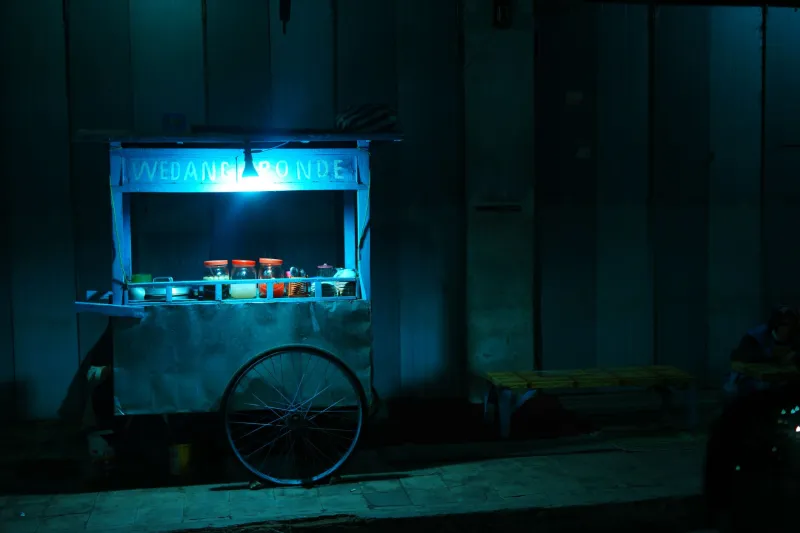
Walk through Semarang on any given afternoon and you'll see this negotiation happening in real time. A freshly painted Dutch facade next to a crumbling neighbor. A hand-lettered sign on an iron gate that might be a gallery announcement or might be a trespassing warning — sometimes both. Street food vendors setting up in the shadow of buildings that have outlasted three or four different versions of the city around them.
Semarang is a city actively deciding what it wants to carry forward and what it's willing to let go. The abandoned mansions are, in their strange, decaying way, forcing that conversation. And the artists, adventurers, and advocates refusing to look away from them might just be the ones who help the city find its answer.