Curb-Side Congress: The Street Corner Debates That Are Actually Moving Indonesian Politics
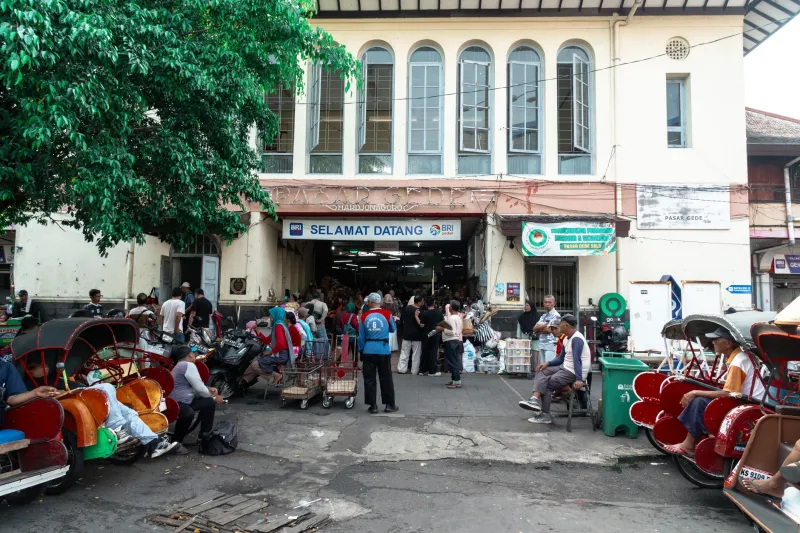
It's a little past seven in the morning when Pak Rudi pulls his becak — a three-wheeled cycle rickshaw — into the loose cluster of vehicles waiting near Pasar Johar. He hasn't had a fare yet, but he's already deep in an argument. His opponent is a woman who sells fried tempeh from a cart two meters away. The subject: whether the regional government's latest flood mitigation budget is a genuine investment or an elaborate patronage scheme dressed up in infrastructure language.
Neither of them has a political science degree. Neither of them is running for anything. But if you stand there long enough, you start to wonder if either of those things actually matters.
Semarang has always been a city where the unofficial version of events gets worked out on the street before it ever reaches a formal venue. But lately, observers — academics, journalists, and a few quietly attentive political operatives — have started paying closer attention to what's being said at these informal gathering points, and why those conversations seem to have an uncanny habit of predicting what comes next.
The Waiting Game That Isn't Wasted
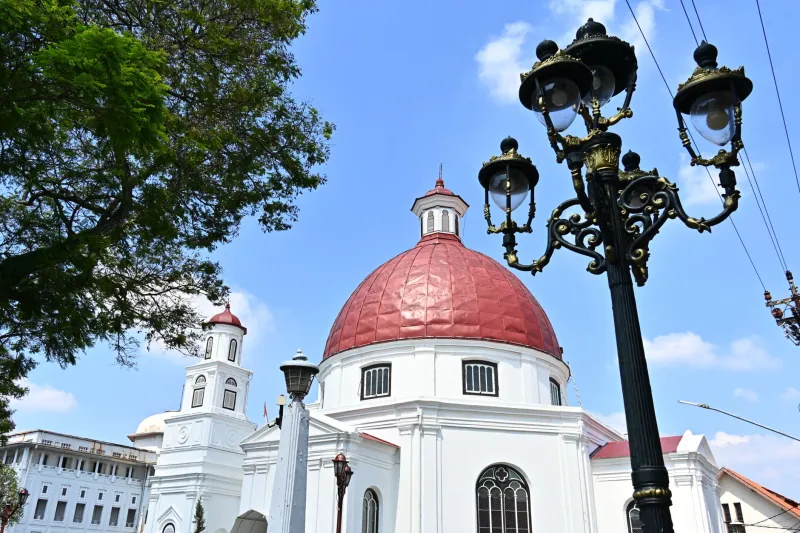
Becak drivers in Semarang spend a significant portion of their working day waiting. Waiting for fares, waiting out the heat, waiting for the traffic to thin. For outsiders, it can look like dead time. But spend a few mornings cycling through the waiting spots — near the old colonial district of Kota Lama, outside the bus terminal, along the canal roads of Kampung Melayu — and the picture changes fast.
These clusters function less like idle hangouts and more like rolling seminars. The topics shift constantly: national election integrity, the creeping cost of rice, the role of Islamic organizations in local governance, whether a Chinese-Indonesian businessperson can ever get a fair hearing in a permit dispute. The analysis is frequently blunt, occasionally funny, and — more often than you'd expect — genuinely sophisticated.
"We read the same news everyone else reads," says Mas Hendra, a becak driver in his late forties who has worked the Simpang Lima area for nearly two decades. "We just have more time to think about what it actually means."
That thinking, multiplied across thousands of informal gathering points across the city, creates something that political scientists have started calling — with varying degrees of academic formality — a deliberative street culture. The idea is straightforward: when people with limited institutional power need to make sense of decisions that affect them, they develop their own analytical frameworks. And in Semarang, those frameworks travel fast.
Religion, Identity, and the Conversation Nobody Official Is Having
If there's one subject that dominates these street-corner congresses more than any other right now, it's the intersection of religious identity and national belonging. Indonesia is the world's largest Muslim-majority democracy, and questions about what that means in practice — for governance, for minority communities, for the relationship between local custom and religious orthodoxy — are live and contested in ways that formal political discourse often flattens.
On the street, those questions get aired without the usual hedging.
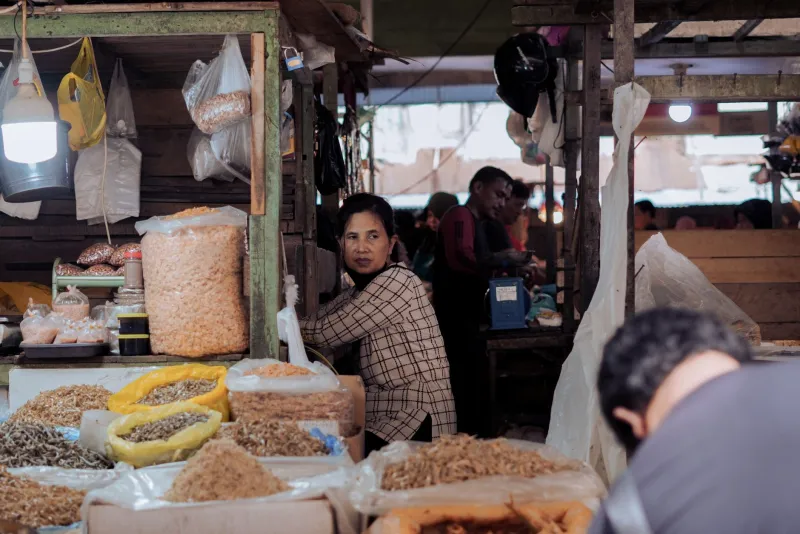
Ibu Wati, who has run a rice and side dishes stall near the Tugu Muda monument for eleven years, describes conversations that would make a diplomat sweat. "We talk about whether someone can be a good Muslim and vote for a Christian candidate. We talk about whether the pesantren schools should get more government money than the public schools. Nobody pretends these are easy questions."
What's notable isn't just that these conversations happen — it's that they happen across lines that official Indonesian political culture often treats as uncrossable. A becak driver who prays five times a day debates a Javanese-Hindu neighbor about the meaning of Pancasila, Indonesia's founding philosophical framework. A Chinese-Indonesian food vendor weighs in on ethnic quota policies with a candor that would be career-ending in a formal setting.
For US readers, the closest analog might be the kind of frank, multi-perspective political conversation that used to happen in union halls or barbershops — spaces where people with real stakes in political outcomes talked to each other without the mediation of professional commentators.
When Street Wisdom Becomes Social Movement
Researchers at Diponegoro University, Semarang's major public university, have been documenting this phenomenon with increasing rigor. Dr. Fajar Nugroho, a political sociologist whose work focuses on grassroots civic engagement in secondary Indonesian cities, argues that Semarang's street discourse functions as an early warning system for broader social shifts.
"Before the 2019 election, the conversations on the street here changed about six months before the polling data moved," he says. "The same thing happened with local sentiment around the Job Creation Law protests. The street knew before the institutions did."
This isn't entirely surprising. Political scientists have long understood that informal networks can transmit information and build consensus faster than formal institutions, especially in societies where trust in those institutions is uneven. But what makes Semarang's version distinctive, Dr. Nugroho suggests, is the city's specific geography of mixing — its dense, walkable neighborhoods where different economic classes and ethnic communities still share physical space in ways that more economically segregated cities don't.
"Semarang never fully gentrified the way Jakarta did," he says. "The becak driver and the small business owner and the civil servant still wait for the same street food. That proximity matters."
The Limits of the Curb
None of this is to romanticize what happens on Semarang's streets. The conversations can be parochial, they can be wrong, and they can carry the same prejudices that show up everywhere else in Indonesian society. Misinformation travels through informal networks just as efficiently as insight does. A rumor about a politician's ethnic background or a whispered claim about a mosque's foreign funding can spread through a cluster of becak drivers and be halfway across the city by noon.
And the people having these conversations are acutely aware of their own limitations. Pak Rudi, still parked near Pasar Johar as the morning heat builds, is under no illusion that his analysis of the flood budget will change anything on its own. "We talk," he says, with a shrug that manages to be both resigned and not quite defeated. "Whether anyone listens is a different problem."
But here's what's easy to miss if you're just passing through: the talking itself is the infrastructure. In a political system where formal channels are expensive, slow, and often captured by interests that don't look much like Pak Rudi or Ibu Wati, the street is where democratic muscle gets built — one argument at a time, between fares, over cooling coffee, in the specific, irreplaceable vernacular of people who have to live with whatever gets decided.