Roots and Remedies: Meet the Jamu Healers Passing Down Semarang's Herbal Secrets to a New Generation
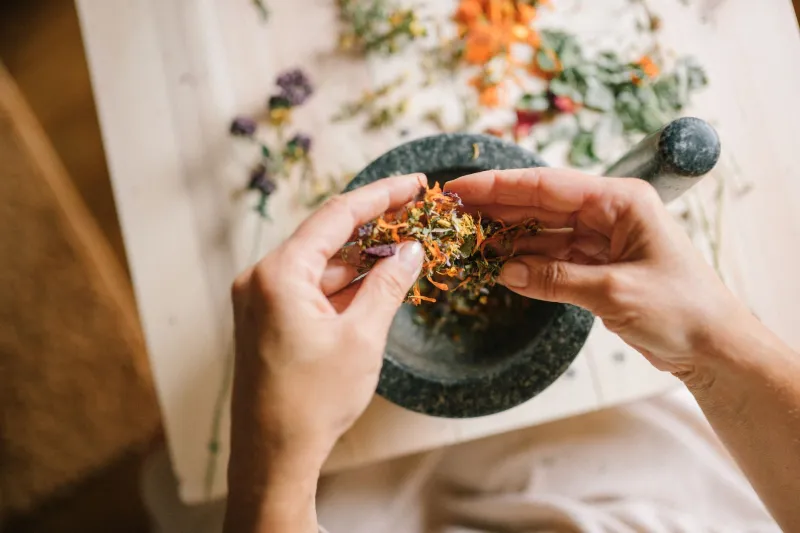
If you've ever wandered through Semarang's kampung neighborhoods early in the morning, you might have caught a whiff of something earthy and sharp cutting through the humid air — turmeric, ginger, galangal, maybe a hint of bitter leaf. Follow your nose long enough and you'll probably find someone like Bu Warsini, a 68-year-old jamu healer who has been blending traditional Indonesian herbal medicine in her small home workshop for over four decades.
But these days, she's not working alone.
"I used to worry nobody would want to learn this," Bu Warsini says, gesturing toward a young woman named Dita, 24, who is carefully measuring dried turmeric root on a small wooden scale. "Now I can't keep up with the people asking."
What Bu Warsini is describing is a quiet but unmistakable shift happening across Semarang — a city better known internationally for its Dutch colonial architecture and legendary spring rolls than for its deep roots in traditional healing. A new generation of Indonesians, many of them young, urban, and surprisingly well-versed in Western wellness culture, are seeking out master jamu practitioners to learn a craft that was nearly written off as obsolete.
What Is Jamu, Exactly?
For American readers who haven't come across the term, jamu is Indonesia's centuries-old system of herbal medicine — think of it as the archipelago's answer to Ayurveda or Traditional Chinese Medicine, but distinctly Javanese in its roots and philosophy. Practitioners use combinations of plants, roots, bark, flowers, and spices to create tonics, pastes, and teas aimed at everything from boosting immunity and easing digestion to managing chronic pain and improving mental clarity.
You've almost certainly consumed some of jamu's core ingredients without knowing it. Turmeric lattes, ginger shots, moringa supplements — the wellness industry in the US has spent the last decade essentially rediscovering what Javanese healers have been doing for generations. The difference is that in Semarang, the knowledge goes far deeper than what fits on a trendy supplement label.
"Western wellness takes one ingredient and sells it," says Pak Hendra, a 71-year-old healer who operates out of a narrow shophouse in the Kauman district. "Jamu is about relationship — between plants, between the body, between the season and the person. You cannot separate them."
The Apprenticeship Model Making a Comeback
Traditionally, jamu knowledge passed through families — mother to daughter, healer to chosen apprentice. But urbanization, modernization, and a few generations of Indonesians who associated traditional medicine with backwardness rather than wisdom nearly broke that chain. By the 1990s and early 2000s, many practitioners in Semarang were aging without successors.
The pandemic changed things in unexpected ways. With global supply chains disrupted and hospitals overwhelmed, interest in immune-supporting herbal remedies surged across Indonesia. Suddenly, jamu wasn't a relic — it was a resource. Sales of traditional herbal products spiked. Social media accounts dedicated to jamu recipes gained hundreds of thousands of followers. And a generation of young Indonesians who'd grown up watching their grandmothers brew these concoctions started asking questions they'd never thought to ask before.
In Semarang, several experienced healers began taking on formal apprentices for the first time in years. The arrangement looks different from practitioner to practitioner. Some run structured workshops out of their homes, charging modest fees to small groups. Others prefer the old-school one-on-one model — a single student, years of learning, knowledge transmitted through practice rather than lecture.
Dita, Bu Warsini's apprentice, studied pharmacy at university before deciding she wanted something the textbooks couldn't give her. "I knew the chemistry," she explains, carefully stirring a pot of what will eventually become a tonic for joint pain. "But I didn't know the story. I didn't know why. Bu Warsini teaches the why."
Ancient Knowledge Meets Modern Curiosity
What makes Semarang's jamu revival particularly interesting is the way it's intersecting with global wellness trends. Several of the city's younger practitioners are actively bridging the gap between traditional knowledge and the kind of evidence-based framing that resonates with a more skeptical, internationally-oriented audience.
Rahma, 29, is one of the most talked-about figures in this new wave. She trained under an elderly healer in Semarang's Genuk neighborhood for three years before launching a small jamu studio that caters to both local clients and the occasional curious tourist. Her shelves are lined with hand-labeled jars, her consultations blend traditional diagnostic methods with modern nutritional awareness, and her Instagram account — followed by wellness enthusiasts from Jakarta to Los Angeles — documents everything from foraging trips to the science behind her formulations.
"I'm not trying to replace doctors," Rahma is quick to clarify. "I'm trying to fill a gap. People want to understand their bodies, they want to feel connected to something real. Jamu gives them that."
For American visitors to Semarang, encountering this world can feel like stumbling onto something genuinely rare — not a tourist performance, but a living tradition in real transition. Some guesthouses in the city now offer informal introductions to jamu culture, and a few local tour operators have started organizing small-group visits to healers who are open to outside guests.
The Stakes Are Real
For all the optimism around jamu's revival, the healers themselves are clear-eyed about the challenges. Much of the knowledge at risk isn't written down anywhere. It lives in the hands and memories of practitioners who are, in many cases, in their sixties and seventies. Specific plant knowledge — which local varieties work best, how growing conditions affect potency, which combinations should never be used together — can't be Googled. It can only be learned by doing, over years.
There's also the question of commercialization. As jamu becomes trendier, there's pressure to simplify, to standardize, to turn complex traditional formulas into products that can be packaged and sold at scale. Practitioners like Pak Hendra worry that what gets marketed as jamu to international audiences often bears little resemblance to the real thing.
"They sell the word," he says, not bitterly, just matter-of-factly. "The word without the knowledge is just a label."
Which is precisely why the apprenticeship model matters so much. Bu Warsini doesn't just teach Dita which plants to use — she teaches her how to listen to a patient, how to observe, how to ask the right questions. It's a holistic education that no online course or wellness podcast can replicate.
A Tradition Worth Watching
Semarang has never been Indonesia's loudest city. It doesn't get the tourist foot traffic of Bali or the international press of Jakarta. But there's something happening here, in kitchens and small workshops and kampung alleyways, that deserves attention.
A body of knowledge that took centuries to accumulate is being deliberately, carefully passed forward. The people doing the passing are pragmatic about the odds — they know not everything will survive, know the world is moving fast, know that turmeric lattes in Brooklyn are not the same as what Bu Warsini makes before sunrise every morning.
But they're trying anyway. And for anyone who cares about cultural preservation, alternative medicine, or just the idea that some kinds of wisdom don't come in capsule form, that's a story worth knowing.