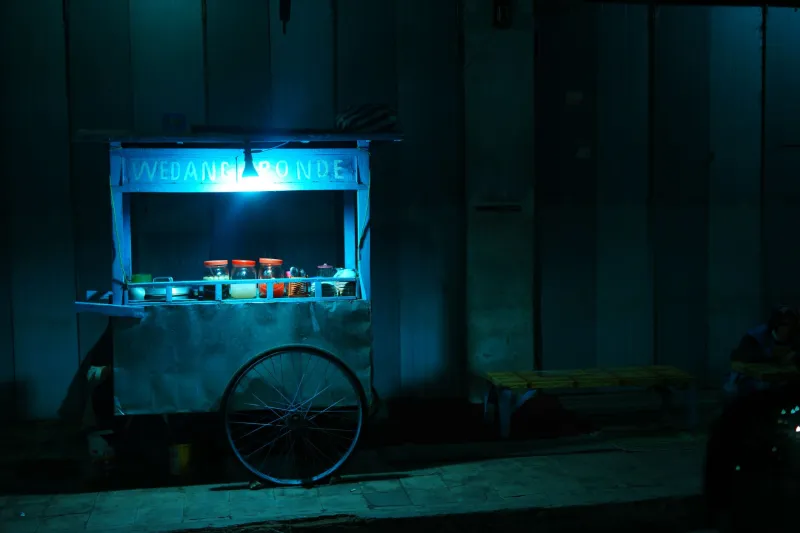
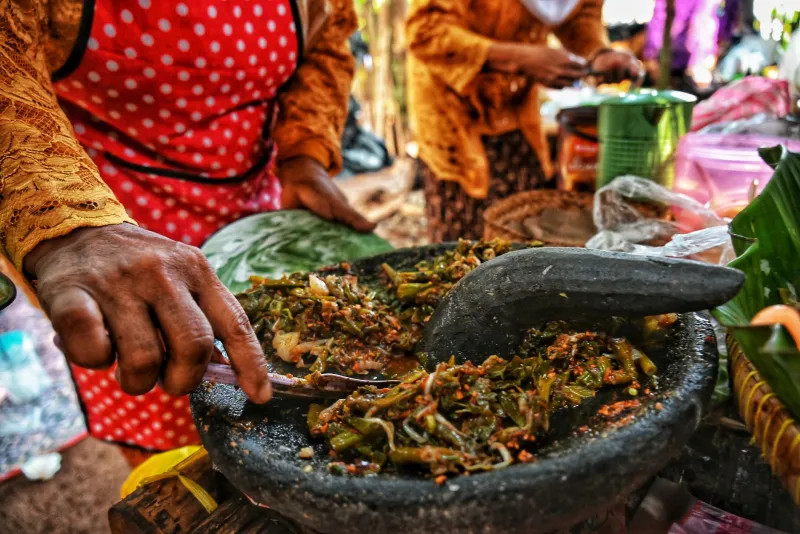
Neighbors Before the Storm: The DIY Safety Nets Keeping Semarang's Flood-Hit Communities Standing
The water came up to Ibu Lastri's kitchen counter last February. She knows this because she has a mark on the wall — a thin pencil line, dated, the way you might track a child's height. Except this one tracks disaster. There are seven marks on that wall, going back to 2015. The highest is from 2022. Last February's line sits just below it.
"Every year I think maybe this is the last time," she says, standing in her kitchen in Kampung Tambaklorok, one of Semarang's most persistently flood-affected neighborhoods. The floor is clean. The walls are patched. The refrigerator, elevated on a platform of stacked bricks, hums quietly. "And then the next year comes."
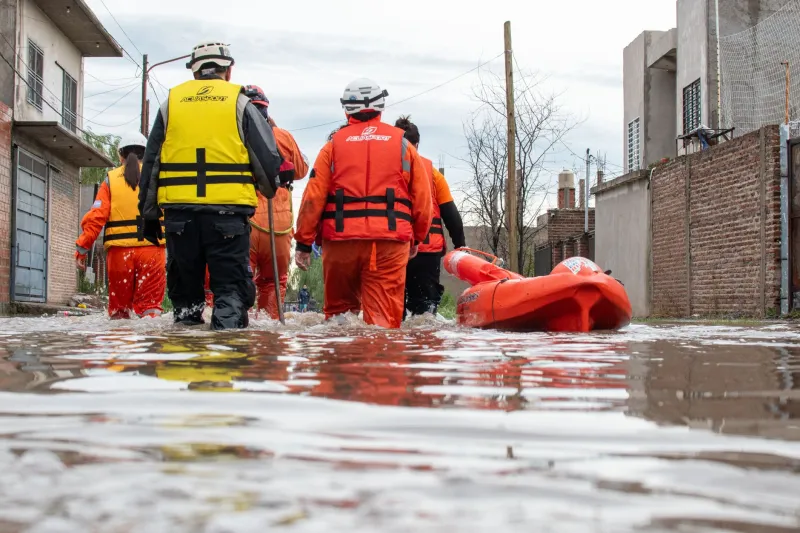
Semarang has a flooding problem that is, depending on who you ask, a function of geography, climate change, land subsidence, inadequate drainage infrastructure, or all four at once. The city sits on low-lying coastal land that has been sinking for decades — a combination of groundwater extraction and the sheer weight of urban development pressing down on soft soil. Add intensifying monsoon rainfall and a drainage system that was never designed for this volume of water, and you get a city that floods with a regularity that has long since stopped being news.
What doesn't make the news — or at least not often enough — is what happens in the days and weeks after the water recedes, when the real accounting begins.
The Math Nobody Does For You
For middle-class homeowners with insurance, a flood is a financial setback. For the families in Kampung Tambaklorok, where most residents rent, work informal jobs, and carry no insurance of any kind, a flood is something closer to an existential event. A waterlogged mattress, a ruined stock of goods for a small home business, a motorcycle that needs a full engine flush — these are not minor inconveniences. They are the difference between staying solvent and falling into debt that takes years to climb out of.
Formal safety nets exist, but they move slowly and reach unevenly. Government disaster relief funds involve paperwork, eligibility reviews, and timelines that rarely match the urgency of someone who needs to replace their cooking equipment before they can earn money to feed their family. Microfinance institutions offer loans, but loans require repayment, and taking on debt in the immediate aftermath of a disaster is a gamble that many families can't afford to lose.
So the neighborhood built its own system.
Arisan Bencana: The Flood Insurance That Runs on Trust
The mechanism is a variation on a savings practice that's been common across Indonesia for generations: the arisan, a rotating community savings circle in which members contribute a fixed amount regularly and take turns receiving the pooled sum. In its traditional form, it's a way to accumulate a lump sum without a bank account. In Tambaklorok, residents have adapted it specifically for disaster response.
Ibu Siti, fifty-four, coordinates one of three such circles in her block. Every month, each of the twenty-two member households contributes 50,000 rupiah — roughly three dollars — to a shared pool. In normal months, the money rotates in the usual way. But when flooding hits, the rules change: any member who sustains damage above an agreed threshold can draw immediately from the emergency reserve, which is maintained separately from the rotating pool.
"It's not insurance like an insurance company," Ibu Siti explains, with the mild impatience of someone who has explained this many times. "It's more like... we already know we're going to need each other. So we make it official."
The system runs entirely on social infrastructure — on the web of relationships, obligations, and mutual accountability that holds a dense urban neighborhood together. There's no contract, no legal enforceability, no dispute resolution mechanism beyond the community's own judgment. It works because the people involved have known each other for decades, because reputation matters in a neighborhood where you see your neighbors every day, and because the alternative — going it alone — is visibly, demonstrably worse.
Beyond the Money: The Logistics of Staying Alive
The financial circles are the most formalized part of the mutual aid ecosystem, but they're not the whole of it. What emerges from extended conversations with residents is a much denser network of informal arrangements that kick in the moment the sky opens up.
There are households on higher ground — even a meter of elevation matters enormously in these floods — that have standing arrangements to host neighbors during severe inundations. There are families who have designated themselves the keepers of shared tools: the hand pumps, the elevated platforms, the waterproof storage containers that cycle through the block as needed. There are WhatsApp groups that function as real-time flood monitoring systems, with residents posting water level updates and road condition reports faster than any official channel.
Bagas, a twenty-eight-year-old who grew up in the neighborhood and now works as an informal coordinator for several of these networks, describes the system as "infrastructure made of people." It's not a metaphor he invented — he heard it from an older resident — but it's one he uses deliberately. "Physical infrastructure fails all the time here," he says. "The pump breaks, the drainage gets blocked, the road floods anyway. The people infrastructure is more reliable."
What Government Gets Right, What It Misses
It would be too simple to frame this as a story about communities succeeding despite the government. The reality is more layered. Semarang's city administration has invested in flood mitigation infrastructure — notably the Banjir Kanal Barat drainage canal system — and some of that investment has meaningfully reduced flooding in certain areas. Local officials have also, in some instances, worked with community organizers to formalize aspects of the mutual aid networks, providing modest resources without trying to take them over.
But the gap between what formal systems can do and what communities actually need remains wide, and it's widening as climate patterns shift. The floods are getting less predictable, the dry periods shorter, the damage more severe. Bureaucratic timelines don't flex easily in response to that kind of acceleration.
"The government plans for the flood that happened last time," says Dr. Anita Wijayanti, an urban resilience researcher at Undip who has been studying Tambaklorok for several years. "The community plans for the flood that might happen next time. That's a fundamentally different orientation."
The Pencil Lines Keep Going Up
Back in Ibu Lastri's kitchen, the conversation eventually turns to whether she'll ever leave. It's a question she's been asked before. Her answer is the same as it's always been: probably not.
Her children were born here. Her savings circle is here. Her network of people who will show up with dry clothes and hot food and a place to sleep when the water comes — that's here too. Moving would mean rebuilding all of that from scratch, in a neighborhood where she knows nobody and nobody knows her.
"The flood is a problem," she says. "But the neighborhood is a solution. You don't leave the solution just because the problem is hard."
She adds another pencil line to the wall. Dates it. Steps back to look.