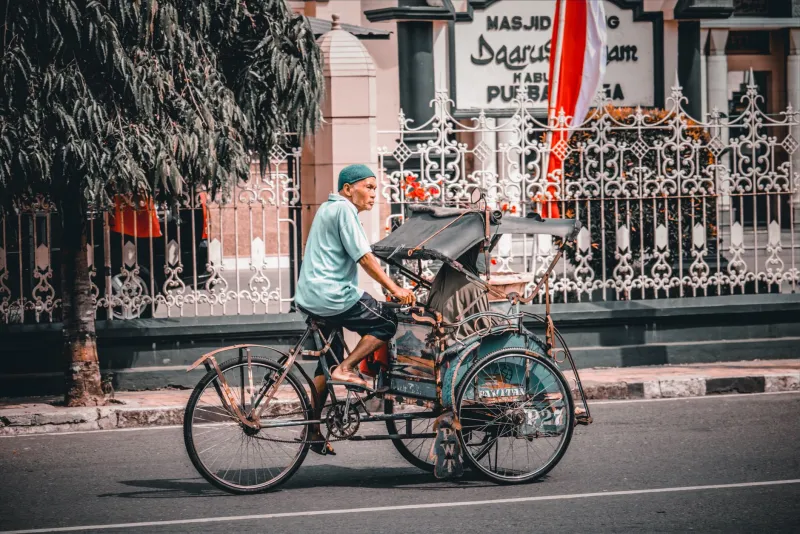
After Dark and Off the Books: The Night Markets Where Semarang's Real Life Happens
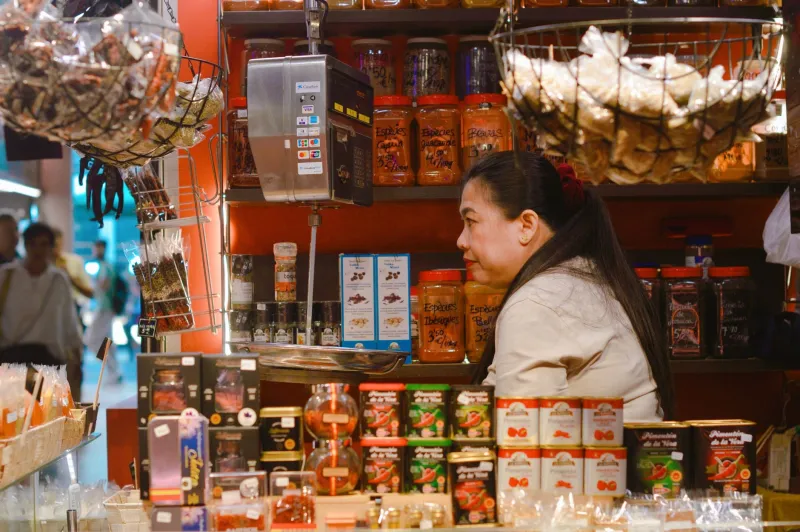
It's half past midnight, and Pak Rusman hasn't sat down in four hours. Behind a folding table stacked with bundled dried chilies, hand-labeled jars of clove oil, and what appears to be an entire corner of a spice warehouse compressed into twelve square feet, he's doing what he does every Tuesday and Friday night: running his business. His phone buzzes constantly. A regular wants two kilos of kemiri nuts held aside. Someone else is asking about galangal root. He answers both without looking up from the customer standing right in front of him.
"This is my office," he says, grinning. "No air conditioning, but the hours are better."
Welcome to Semarang after sunset — specifically, to the side of the city that doesn't show up on Google Maps.
A Parallel City, Running on Its Own Clock
Semarang has its share of official night markets — the kind with Instagram-friendly lighting and designated food stalls that close promptly at 10 p.m. But the markets locals actually care about operate on a completely different schedule and by a completely different set of rules. They pop up in the gaps: behind the wholesale district near Johar, along the back roads of Kauman, in the shadow of warehouses near the port. They don't advertise. You find them the same way you find anything worth finding in this city — through someone who already knows.
Think of it less like a flea market and more like a neighborhood coming alive in a way it can't quite manage during daylight hours. The heat drops, the traffic thins out, and suddenly there's space — physical and social — for something looser and more honest to take over.
What's Actually for Sale
The inventory at these markets would genuinely confuse a lot of outsiders. Yes, there's food — there's always food in Semarang — but the night markets aren't primarily about eating. They're trading hubs in the older, broader sense of the word.
At one end of the spectrum, you've got vendors like Pak Rusman, dealing in raw ingredients that restaurants, home cooks, and traditional medicine practitioners quietly depend on. Spices sold in bulk at prices that undercut the daytime markets by enough to matter. Herbs that don't have names in English. Roots and barks that have been moving through Semarang's trade networks for centuries.
At the other end, you've got something closer to an antique fair run entirely on vibes. Vintage batik cloth folded into neat stacks. Old Dutch-era ceramics that may or may not be authentic. Transistor radios. Stacks of cassette tapes. A guy selling nothing but vintage keris sheaths out of a duffel bag. The kind of stuff that would cause serious bidding wars on eBay if anyone bothered to list it there.
In between, there's everything else: phone accessories, herbal remedies, locally made snacks in unlabeled packaging, second-hand tools, handwoven baskets, and occasionally something so specific and unexpected that you stop walking entirely just to figure out what you're looking at.
The Social Architecture of the Haggle
If you've ever watched two people negotiate a price in a Midwestern garage sale and thought it felt a little awkward, you have not experienced haggling as a social art form. In Semarang's night markets, the back-and-forth over price isn't a conflict — it's basically the whole point. It's how people check in with each other, establish trust, and figure out where they stand.
Ibu Wati, who has been selling vintage textiles at the same informal spot near Pecinan for going on eleven years, explains it plainly. "If someone doesn't haggle, I worry about them," she says, laughing. "It means they're not paying attention. Or they're too sad to care."
She knows most of her regulars by their negotiating style. One woman always opens at exactly half the asking price and won't budge much. A guy who comes every few weeks pretends he's not interested and then circles back three times before buying. A younger customer, maybe college-aged, always asks questions first — about the fabric, where it came from, how old it is — before she even mentions money. Ibu Wati says that one's her favorite. "She actually wants to know. Most people just want the price."
This is the part of the night market that doesn't translate easily into economic data. The transaction isn't just a transaction. It's a relationship being maintained, or built, or occasionally tested.
An Economy That Doesn't File Taxes
None of this shows up in official records, and that's precisely why it works the way it does. The informal economy in Indonesian cities like Semarang is massive — researchers estimate it accounts for a significant chunk of actual daily economic activity — but it's almost entirely invisible to the metrics that governments and development organizations use to measure prosperity.
For the vendors, that invisibility is partly a feature. No permits, no fees, no inspections. The trade-off is no protections either. If it rains hard, everyone packs up and loses a night's income. If the city decides to clear a stretch of road, the market simply migrates somewhere else and reconstitutes itself within a week.
"We've moved four times in eleven years," Ibu Wati says, without much apparent bitterness. "The market always comes back. The people know where to find us."
That resilience is something that formal retail genuinely can't replicate. The night market doesn't have a lease, which means it also doesn't have a landlord who can triple the rent.
Why Americans Should Care (and Why They'd Love It)
For a US traveler, the instinct might be to stick to the sanctioned, well-lit, tourism-approved version of Semarang's food and shopping scene. That's understandable. It's also a significant miss.
The night markets are where you find the city's actual texture — the unglamorous, complicated, deeply human version of a place that's been trading goods and gossip across the same streets for hundreds of years. It's the difference between visiting a city and briefly inhabiting one.
Practically speaking: bring cash (small bills), bring patience, and don't act like you're in a hurry even if you are. Ask questions about what things are before you ask about prices. And if someone offers you tea or a snack while you're browsing, accept it. That's not a sales tactic. That's just how this works.
Pak Rusman is still on his phone when we say goodbye, already fielding the next order. The market around him hums along — a few hundred people moving through a space that technically doesn't exist, doing business that technically doesn't register, building a community that doesn't need anyone's permission.
Semarang, after dark. This is the real thing.